

30–90 Day SEO Plan to Earn Google Perspectives Citations for Startups
Google Perspectives surfaces firsthand, experience-based content from forums, social platforms, and creators, then folds those results into core search ranking and AI-generated answers. There is no separate optimization checklist or secret markup to chase. The single highest-leverage move is building genuinely unique, indexable firsthand content on your site and cultivating authentic off-site brand mentions across the communities and creators Google already trusts.
TL;DR:
- Building unique, firsthand content on your site and cultivating authentic off-site brand mentions are the most effective ways to improve Perspectives visibility.
- Technical SEO fundamentals such as indexing, accurate structured data, and page experience remain crucial, especially for high-value, experience-heavy content.
- Perspectives favors content from videos, Reddit, Quora, niche forums, and creator blogs that demonstrate genuine expertise and specific, experience-based insights.
- Brand mentions and community engagement now function as trust signals and citation sources, often outperforming traditional backlinks for AI citation purposes.
- Focus on authentic community participation, earned media, and structured firsthand content, rather than gaming tactics or superficial format hacks, for sustainable growth.
Table of Contents
- What Is Google Perspectives and What Content Does It Surface?
- How Does Perspectives Work With Google’s Core Ranking Systems?
- Why Does Perspectives Change What Counts as an SEO Signal?
- Optimization Checklist: What to Prioritize First
- Which Formats and Channels Actually Get Picked Up?
- How Do You Measure Perspectives and AI Citation Performance?
- How Storylinepros Approaches Perspectives Optimization
- Where This Actually Pays Off (And Where Teams Waste Time)
- Ready to Build Off-Site Visibility for Perspectives?
- Sources
- FAQ
What Is Google Perspectives and What Content Does It Surface?
Perspectives is Google’s way of pulling human, experience-based content into search results instead of leaving every query to rank-and-file web pages. You’ll see it as a dedicated tab, a carousel mixed into regular results, or increasingly as previews embedded directly inside AI-generated answers, often labeled with a creator handle or community name.
The feature does not pull from a separate index. It draws on content Google has already crawled and indexed, then re-ranks it for queries where lived experience beats a polished landing page. According to Google’s own developer guidance, Perspectives previews inside AI responses now routinely show that source context, which means the platform a piece of content lives on matters almost as much as the content itself.
The source types Perspectives favors are consistent:
- YouTube videos and comments, especially tutorial and review formats
- Reddit and Quora threads with detailed, specific answers
- TikTok and other short-form video responses to a question
- Forum posts on niche, topic-specific communities
- Creator blog posts that read like a personal account rather than marketing copy
The trigger is intent, not keyword. Queries that imply a search for advice, comparison, or “what actually happened” (think “is X worth it” or “how does X really feel”) pull Perspectives results far more often than transactional or purely factual searches.
How Does Perspectives Work With Google’s Core Ranking Systems?
Perspectives eligibility starts with the same gate every other Google feature uses: is your content indexed, crawlable, and technically sound? Google has been explicit that generative AI features are built on core Search systems, not a parallel pipeline with its own rules. Skip the fundamentals and no amount of “firsthand experience” language will get you in front of Perspectives.
Run through these checks before investing in anything more advanced:
- Confirm indexing status for target URLs using URL Inspection in Search Console, and fix any “discovered, not indexed” or “crawled, not indexed” flags.
- Audit your sitemap and robots.txt to make sure the pages you want surfaced are not accidentally blocked or excluded.
- Verify canonical tags point to the version of the page you actually want cited, especially on syndicated or repurposed content.
- Hit Core Web Vitals targets and confirm mobile-first rendering, since page experience still factors into whether Google bothers to re-rank a page for AI features at all.
- Add structured data where it applies (Article, VideoObject, FAQPage) and, for video content, include captions and timestamp markup so Google can parse what’s actually being said.
Pro Tip: Run URL Inspection on your three most experience-heavy pages (case studies, first-person reviews, “we tested this” posts) before anything else. If those aren’t indexed, nothing downstream matters.
None of this is Perspectives-specific plumbing. It’s the same technical SEO discipline that’s mattered for a decade, applied with more urgency because AI features compress the number of visible slots.
Why Does Perspectives Change What Counts as an SEO Signal?
Perspectives rewards a different evidence base than traditional ranking. E‑E‑A‑T, Google’s shorthand for experience, expertise, authoritativeness, and trust, stops being an abstract audit checkbox and becomes the literal selection criteria. Content that shows a named author with a byline, references a specific case study, or cites other authoritative sources has a measurably better shot at being pulled into a Perspective, according to Search Engine Journal’s analysis of firsthand-experience signals, which recommends including one to three outbound links to credible sources per article to validate quality.
Brand mentions now do work that used to belong exclusively to backlinks. A Reddit thread where real users discuss your product, a YouTube review that name-checks your brand, a podcast appearance where your founder answers a specific question: each of these builds the kind of off-site footprint AI systems draw on when deciding what to cite. Think with Google’s guidance on the AI search era puts it plainly: good SEO is good generative engine optimization, and unique expertise beats speculative tricks every time.
This shift has a real cost, too. AI Overviews and Perspectives previews are driving zero-click behavior higher, meaning a page can influence an AI answer without ever generating a click. That’s not a reason to ignore Perspectives. It’s a reason to measure impressions and citations alongside traffic, not instead of it.
Three shifts worth internalizing:
- Authoritative citations inside your content now function like internal trust signals, not just outbound courtesy links
- A single well-placed community mention can outperform a dozen thin backlinks for AI citation purposes
- Video and social presence increasingly substitutes for the domain authority metrics SEOs have relied on for years
Optimization Checklist: What to Prioritize First
Treat this as a sequence, not a menu. Each layer makes the next one more effective.
1. Fix your on-site foundation. Publish content that reads like a field report, not a landing page. Add real author bios with credentials, embed specific case studies with numbers attached, and mark up FAQ and article content with structured data so Google can parse the experience claims cleanly. A generic “10 tips” post will never out-compete a Reddit thread for a Perspectives slot; a documented case study with specifics might.
2. Get video fundamentals right. Add accurate captions (not auto-generated junk), timestamp key sections, and write descriptive video metadata that matches how people actually phrase questions. Then repurpose your long-form written content into short video explainers. Video is one of the most consistently surfaced formats in Perspectives, and most brands still treat it as an afterthought.
3. Participate in communities for real. Answer questions on forums and Reddit threads in your niche without disguising it as marketing. Track the questions that come up repeatedly, then turn the best answers into canonical, citeable pages on your own site. This is the single most underused tactic in the checklist, largely because it doesn’t scale the way a content calendar does.
4. Earn media and third-party mentions. Secure coverage and citations from outlets your audience already trusts, and structure those placements so they’re specific and attributable rather than vague brand namedrops. Google’s guidance is direct about this: success in AI features often comes from an off-site footprint where a brand is discussed authentically, not from a brand trying to self-publish into those feeds.
5. Skip the speculative hacks. Do not spend time on llms.txt files, artificial content “chunking,” or other tactics with no documented effect on Perspectives eligibility. Google has warned against exactly this kind of novelty-chasing. Time spent gaming a format that may not matter next quarter is time not spent building the case studies and community presence that reliably do.
Pro Tip: If you only have bandwidth for one thing this quarter, pick community participation. It’s the slowest tactic to show results and the one every competitor is skipping because it doesn’t fit neatly into a content calendar.
Which Formats and Channels Actually Get Picked Up?
Format choice determines discoverability more than most teams assume. YouTube rewards descriptive titles, chapter markers, accurate captions, and an active Community tab where you answer viewer questions directly, feeding Google fresh signals about what your video actually covers. A detailed YouTube SEO breakdown from Voclify walks through the technical side of this if you need a deeper reference.
Forums reward authenticity over frequency. One detailed, specific answer to a recurring question outperforms ten generic replies. The winning move is converting your best forum answers into on-site “field notes,” short, specific documents that other people naturally link back to because they solved a real problem.
Short-form social (TikTok, Reels, Shorts) works best as a discovery funnel rather than a destination. Package the clip to hook attention, then send viewers to a canonical page on your own site where the full context lives.
The most efficient teams run one repurposing pipeline instead of five disconnected content efforts:
- Publish a detailed long-form piece or case study on-site
- Cut it into a full video with proper captions and timestamps
- Slice the video into short clips for social discovery
- Answer related questions in forums, linking back to the original piece
- Fold the best forum exchanges into updated on-site FAQ content
How Do You Measure Perspectives and AI Citation Performance?
Search Console’s generative AI reporting now shows impressions by page, so you can see which URLs are actually surfacing inside AI features, not just traditional results. Search Console’s own documentation covers how to pull and interpret this data.
Pair that with a few other checks:
- Filter GA4 referral traffic for AI and LLM sources to spot early traffic patterns from ChatGPT or Perplexity
- Manually query ChatGPT and Perplexity for your brand or product category monthly to see whether and how you’re mentioned
- Track branded search volume and social mention counts as a proxy for off-site footprint growth
- Monitor video watch time and comment engagement, since both feed into whether Google treats a video as a strong Perspectives candidate
Zero-click behavior is rising industry-wide, so a monthly audit cadence matters more now than it did when rankings alone told the whole story. Run the Search Console AI report, the LLM mention check, and a branded-search trend review together, once a month, and treat gaps between them as your next content priority.
How Storylinepros Approaches Perspectives Optimization
Storylinepros builds the off-site footprint that Perspectives rewards, rather than betting everything on-site content alone. The service mix maps directly onto the checklist above:
- Earned media placements that create the kind of authoritative, attributable mentions Google’s own guidance points to
- Reddit and community programs that seed authentic discussion instead of disguised promotion
- Podcast placements that generate quotable, citeable firsthand commentary from founders
- AI Optimization work focused on structuring content so it’s actually indexable and citation-ready
A typical starter engagement runs as a focused pilot: placement targets, community seeding, and a repurposing plan built around whatever long-form assets a client already has. First-hand content paired with earned third-party mentions builds citation potential faster than either tactic alone.
Where This Actually Pays Off (And Where Teams Waste Time)
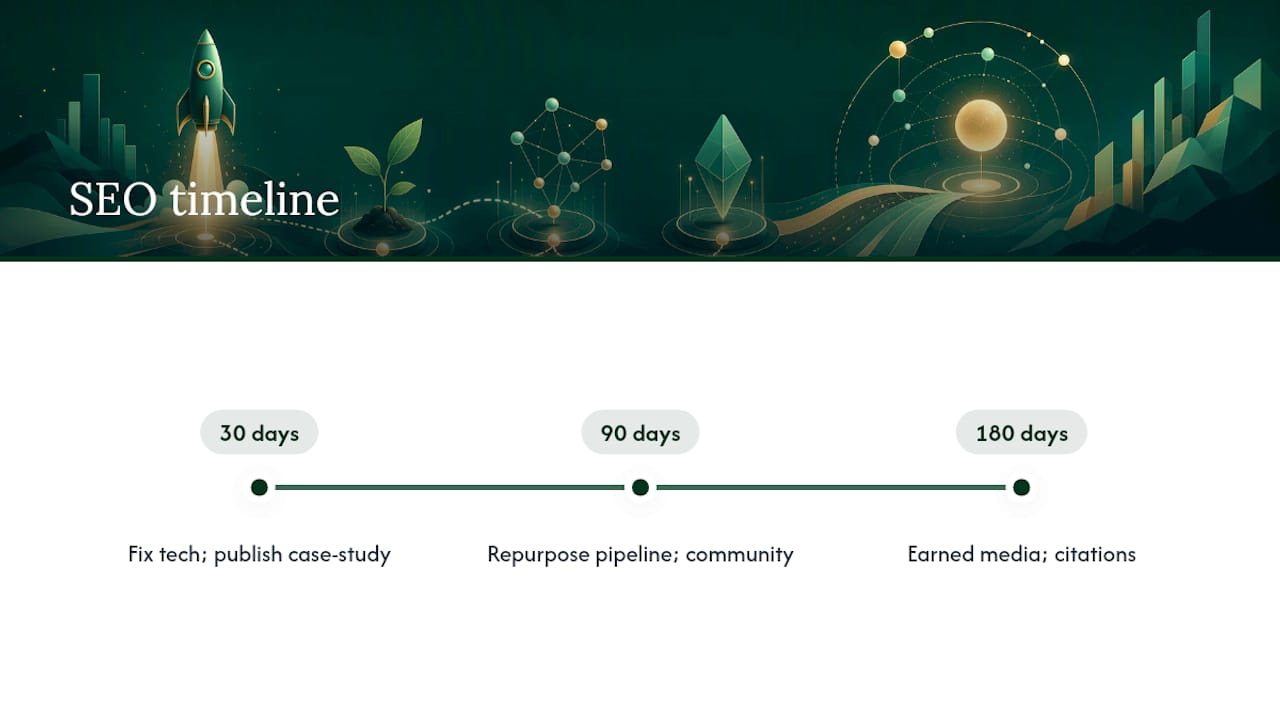
If you’re prioritizing under real resource constraints, the sequence matters. In the first 30 days, fix technical eligibility and ship one genuinely firsthand piece, a real case study, not a listicle. By 90 days, you should have a working repurposing pipeline and at least one active community presence. By 180 days, earned media and third-party citations should be compounding on top of that foundation.
The biggest waste of time I see is teams chasing speculative format hacks while ignoring the unglamorous work of authentic community participation. The second biggest is over-relying on shallow user-generated content, assuming volume substitutes for specificity. It doesn’t.
Hire outside help when you need earned media relationships and community credibility you don’t already have in-house. Keep the on-site technical and content work internal if you have the talent, since nobody understands your product’s actual firsthand experience better than the people building it.
— Nik
Ready to Build Off-Site Visibility for Perspectives?
Everything in the checklist above, community seeding, earned media, podcast placements, structured firsthand content, takes real time to execute well, and most in-house SEO teams are already stretched thin running the rest of the content calendar. Storylinepros is built specifically around that gap: instead of a retainer that promises effort, you pay for delivered placements, podcast spots, and community engagement that actually build the off-site footprint Perspectives rewards.

The service lineup covers earned media, podcast placements, Reddit and community programs, and AI optimization work, all executed directly by people with existing media relationships rather than handed off to a junior account team. If you want proof before committing, the case studies page walks through what these campaigns actually delivered for other startups. Pilot campaigns start at a published price on the Storylinepros site, making them accessible for testing the approach on a product line or launch before expanding further.
Sources
- Optimizing your website for generative AI features on Google Search — Google Developers
- Create & capture demand in the AI search era — Think with Google
- How to demonstrate first‑hand experience for E‑E‑A‑T — Search Engine Journal
- Search Console — Google
FAQ
What Is Google Perspectives?
Google Perspectives is a search feature that surfaces firsthand, experience-based content, forum threads, videos, social posts, and creator blogs, inside regular results and AI-generated answers. It runs on Google’s core index rather than a separate system, so standard indexing and crawlability rules still apply.
How Do You Qualify for Google Perspectives?
Content needs to be indexed, crawlable, and technically sound first, then genuinely firsthand and specific enough to stand out from commodity content. Google’s own developer guidance confirms there’s no separate submission process, eligibility flows from the same systems that power regular Search.
How Is Perspectives Different From AI Overviews?
AI Overviews synthesize an answer from multiple sources into one generated summary. Perspectives specifically highlights individual human viewpoints and experiences, often with a visible creator or community attribution, rather than blending everything into a single anonymous response.
Does Storylinepros Help With Perspectives Optimization?
Storylinepros builds the earned media, podcast, and community presence that feeds Perspectives visibility, alongside AI optimization work on-site. Pricing starts with pilot campaigns at published prices, and other service pricing is available on the Storylinepros site.
Can You Game Perspectives With Technical Tricks Like llms.txt?
No. Google has specifically warned against speculative tactics like llms.txt files or artificial content chunking, since they have no documented effect on eligibility. The reliable path is unique firsthand content plus genuine off-site brand presence, not format hacks.