
Founders: Copy Ready Podcast One Sheets That Book in 60 Minutes
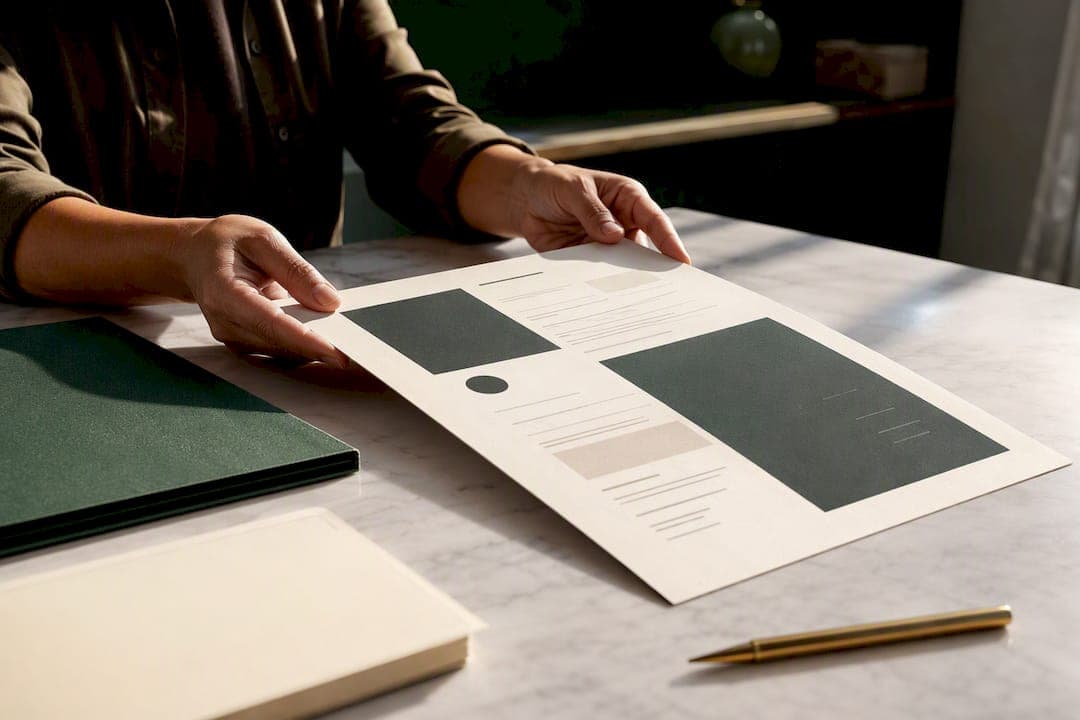
A podcast one sheet is a single page that packages a guest or a show for the person deciding whether to book it, giving producers exactly what they need to say yes fast. You send it during outreach, before booking, either as a PDF attachment or a link. It works because it eliminates back-and-forth: no producer wants to hunt through your website for a bio and a headshot when your email could hand them everything in one glance.
TL;DR:
- A podcast one sheet must include a clear headshot or logo, a compelling hook, a short bio, and three to five specific interview topics with sample questions.
- The one sheet should prioritize visual clarity with minimal clutter, using a hierarchy that places the hook and topics at the top for quick scanning.
- Send the one sheet during outreach as a PDF attachment or live link, and follow up with new updates or recent episodes after initial contact.
- A media kit, which includes detailed assets and press coverage, is sent after booking, not as part of the initial pitch.
- Avoid overbroad topics, unverifiable stats, visual clutter, and missing clear calls to action to maximize the chances of booking.
Table of Contents
- What a Podcast One Sheet Actually Does
- Podcast One Sheet vs. Media Kit: What’s the Difference?
- The Core Elements a Podcast One Sheet Must Include
- What Do Real Podcast One Sheets Look Like?
- How to Create a Podcast One Sheet, Step by Step
- Common Podcast One Sheet Mistakes to Avoid
- How a One Sheet Fits Into a Bigger Visibility Play
- One Workflow, One Trick: A Faster Way to Get Booked
- Sources
What a Podcast One Sheet Actually Does
A one sheet sits at the front of the booking pipeline. A producer or host gets dozens of pitches a week, and most get skimmed for ten seconds before a decision gets made. Your one sheet either earns a reply or gets archived.
It solves three specific problems at once:
- Speed: the producer doesn’t have to dig through a website or LinkedIn to figure out who you are.
- Clarity: they see immediately what you’ll talk about and whether it fits their audience.
- Confidence: logistics and prior appearances signal you’ll actually show up prepared.
A tight, well-built one sheet often gets a faster yes, gives the host material to prep the episode, and later doubles as a promo asset once the show is scheduled.
Podcast One Sheet vs. Media Kit: What’s the Difference?
A one sheet is a single page built for the first pitch. A media kit is a broader collection of downloadable assets, usually sent after a booking is confirmed, not before.
Think of it as sequencing, not competing formats:
- Outreach stage: send the one sheet. It’s fast to read and easy to forward internally.
- After booking: send the media kit, which can include high resolution photos, extended bios, past press mentions, and multi-page brand materials.
- Never mix the two: stuffing a pitch email with a ten-page kit usually gets it ignored, not read more closely.
The Core Elements a Podcast One Sheet Must Include
Every effective one sheet, whether it’s for a host promoting a show or a guest pitching for a slot, shares the same skeleton. Here’s the order that works, from top of the page down:
- Headshot, logo, and cover art. These aren’t decoration. A recognizable face and clean branding tell a producer this person or show is already established enough to be worth their time.
- A headline and a two to three sentence hook. State who you are and why it matters in one breath. Skip the résumé language.
- A short third-person bio, plus a rip-and-read intro. The bio sells you; the rip-and-read line is what the host actually reads on air, so write it the way you’d want to be introduced.
- Three to five interview topics with sample questions. Feedback drawn from tens of thousands of interviews shows hosts consistently prefer guests who arrive with topics and questions already framed, since it does their prep work for them.
- Audience fit or a couple of relevant numbers. If you don’t have audited download stats, don’t invent them. Describe your reach honestly, e.g. “newsletter of 4,000 founders” beats a vague, unverifiable claim.
- Prior appearances or a short proof point. One or two shows you’ve been on, or a single line of measurable impact, does more than a paragraph of praise.
- Contact info, a scheduling link, and a clear call to action. Make the next step obvious. “Book a 30 minute slot here” beats “feel free to reach out.”
Pro Tip: Producers scan top to bottom in seconds. Put your hook and your best topic in the top third of the page. If they never scroll, they should already know whether to book you.
What Do Real Podcast One Sheets Look Like?
Two formats cover most use cases: one built for a show pitching sponsors or new listeners, and one built for a guest pitching for airtime.
A host-facing show one sheet usually leads with the show’s format and audience, then features two or three standout episodes with a one-line outcome for each, since annotated examples in guide walkthroughs consistently show that naming specific episodes and their impact does more than a general download count.
A guest one sheet flips the emphasis. The topics section does the heavy lifting: instead of listing broad subjects like “leadership” or “marketing,” it frames three or four specific, conversational angles a host could ask about directly, paired with a rip-and-read intro the host can read verbatim.
For building either one, Canva is the fastest starting point. Search “podcast one sheet” inside the template library, drop in your headshot and logo, and adjust font sizes so the hook stays legible even on a phone screen. Export as a PDF for attachments or grab a shareable link for pitches.
How to Create a Podcast One Sheet, Step by Step
Building one from scratch doesn’t need to take all day. Work through it in this order:
- Write the hook and bio first. Everything else on the page supports these two elements, so get them right before touching design.
- Pick three to five concrete topics and sample questions. Vague topics get skipped over; specific ones get booked.
- Gather and prep your assets. Crop the headshot tight, optimize the logo file size, and pull links to two or three episodes you’re proud of.
- Build the layout with a clear hierarchy. Headline first, then subheads, then bullets. Leave white space; a cramped page reads as amateur no matter how good the content is.
- Export the right format for the job. PDFs work best as email attachments; a hosted link works better inside a pitch template or a media page you plan to update later, since a page hosted on something like WordPress can be edited without resending a new file every time.
- Add logistics and a scheduling link. Time zone, recording setup (remote or in person), and a direct booking link remove the last excuse for a producer not to move forward.
Pro Tip: If you update your one sheet often, host it as a live link instead of a static PDF. You fix typos and swap topics without ever sending a stale version again.
Common Podcast One Sheet Mistakes to Avoid
Most one sheets fail for the same handful of reasons, and all of them are fixable in minutes.
- Overbroad topics. “Business” isn’t a topic. “Why most startup pitch decks bury the one number investors actually want” is.
- Unverifiable stats. Don’t claim a download number you can’t back up. A specific, honest detail beats an inflated round number.
- Visual clutter. Too many fonts, colors, or graphics bury the message. Stick to two fonts and one accent color.
- No call to action. If the page doesn’t say what to do next, most producers won’t guess.
- Wrong file format. A 15MB PDF often bounces from inboxes; a broken share link kills the pitch instantly.
- No scheduling link. Forcing a producer to email back and forth to find a time adds friction you don’t need.
Before you send anything, read the page as if you’d never met yourself: is the hook clear in five seconds, and is the next step obvious?
How a One Sheet Fits Into a Bigger Visibility Play
For founders doing earned media outreach, a one sheet isn’t just a booking tool. It’s often the first document a reporter, podcast producer, or investor-facing show reviews before deciding you’re worth fifteen minutes of airtime. Storylinepros treats it as a compressed pitch: hook, proof, and ask, built to move fast through a producer’s inbox.
The strongest founder one sheets we’ve seen don’t lean on adjectives. They lean on one hard number: revenue growth, a specific media placement, a user milestone. That single data point does more convincing than three paragraphs of positioning.
If you’re building a campaign around press placements and podcast guest spots, pull your strongest campaign metric or case-study detail and put it above the fold. Investor and founder-focused shows book guests who arrive with proof, not adjectives, and Storylinepros’ case studies are a useful reference point for the kind of specific, quantified proof that earns a callback.
One Workflow, One Trick: A Faster Way to Get Booked
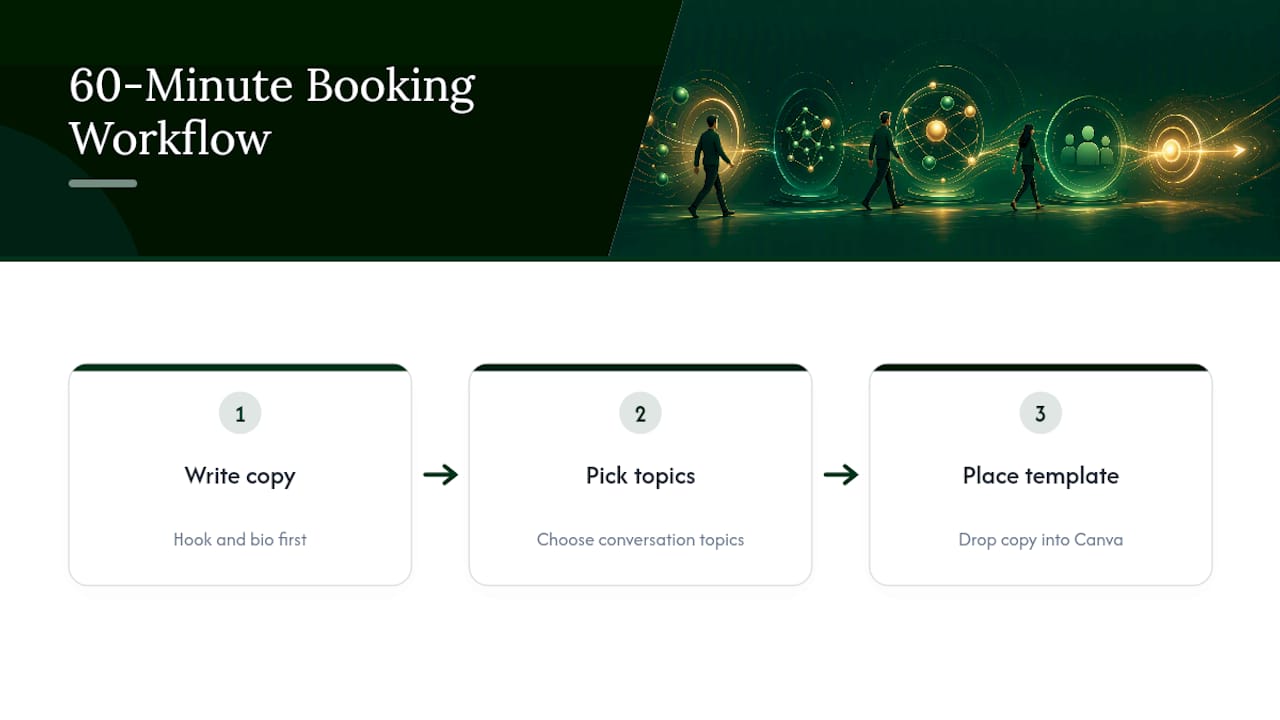
Here’s the version I actually recommend: block sixty minutes, write the hook and bio first, pick your topics second, and drop everything into a Canva template last. Design should always come after the words are right, never before.
The trick most guests skip: after sending your one sheet, follow up five to seven days later with one new detail, a fresh episode link, a recent press mention, anything that shows momentum. Producers remember movement more than they remember a static pitch sitting in their inbox.
Copy the structure above into your own template today, and don’t overthink the first draft. You can always tighten the hook after you’ve sent it once.
— Nik
Sources
- Podcast One Sheet: Examples and How to Make Your Own
- How to Create a Podcast One-Sheet (Guide & Template)
- Canva
- Podcast One Sheet: Free Template and Real Examples | PitchCentric