

Startup Press Release Frequency: 3–6 Releases a Year, 48 Hours–5 Days Lead Time
Publish a press release only when you have verifiable news, and calibrate volume to your company’s size and news flow rather than a calendar habit. Startups typically do well with several releases a year, growing companies with more frequent releases, and larger organizations with significantly more, reflecting their greater news volume and organizational activity. That range can be treated as a floor for planning, not a target to hit.
TL;DR:
- Most companies should tailor their press release frequency based on the volume of genuine news they generate, not on industry norms or calendars.
- Sending releases on Thursdays between 10 a.m. and 4 p.m. yields higher pickup rates, especially when distributed 48 hours to 5 days before an event.
- Releasing news solely to boost SEO or backlinks can harm credibility unless it triggers independent media coverage or supports impactful milestones.
- Focus on newsworthy, well-timed releases anchored to significant events like funding rounds or product launches, rather than aiming for a fixed number of releases annually.
- Small startups benefit from fewer, sharper releases complemented by targeted placements and community engagement to maximize visibility.
Table of Contents
- How Often Should Companies Send Press Releases?
- What’s the Best Day and Time to Send a Press Release?
- When Should You Hold a Press Release Instead of Sending It?
- How Do You Know If Your Press Release Cadence Is Working?
- A Repeatable Workflow for Planning Press Release Timing
- What Storylinepros Sees Working for Startup Visibility Campaigns
- Frequency Is a Symptom, Not a Strategy
- Get Help Building a Release Cadence That Actually Earns Coverage
- Sources
- FAQ
How Often Should Companies Send Press Releases?
The right number depends less on industry and more on how much genuine news a company generates in a given stretch. PR Newswire’s 2024 State of the Press Release report found that 93% of communicators plan to send the same number or more releases this year, which tells you the tool isn’t going away. It doesn’t tell you how many releases you should send.
A workable starting framework by stage:
- Startups (early stage, limited news flow): 3 to 6 releases a year, usually tied to funding, product launches, or major partnerships.
- Growing companies (Series A through C, expanding teams): 6 to 12 releases a year, mixing bigger announcements with smaller momentum updates.
- Large or public organizations: 10 to 20 releases a year, often including recurring disclosures, hires, and expansion news.
None of these numbers work as a fixed quota. A layered cadence model fits better in practice: quarterly anchor releases for the biggest narrative moves (funding rounds, major product launches, leadership changes), monthly maintenance releases to keep momentum between anchors, and event-driven spikes when something genuinely newsworthy happens outside the plan. Increase frequency around product launches, funding closes, or regulatory milestones. Pull back during quiet stretches. A startup that pushes out a release every two weeks regardless of substance trains reporters to skim past its name, while one that goes silent for six months loses the search and media presence it built.
What’s the Best Day and Time to Send a Press Release?
Timing affects pickup rates more than most communications teams assume. Analysis of 2,413 press releases across four wire services found Thursday sends produced a higher pickup rate than Tuesday sends, the day most teams default to out of habit. Weekend distribution rarely performs well, since most newsrooms are thin on staff and editorial calendars are already set.
Statistic to remember: PR Newswire’s traffic data shows peak site engagement clusters on Tuesdays through Thursdays, between 10 a.m. and 4 p.m., which means mid-morning midweek sends land when editors are actually working, not when inboxes are flooded from overnight news.
Lead time matters just as much as the day:
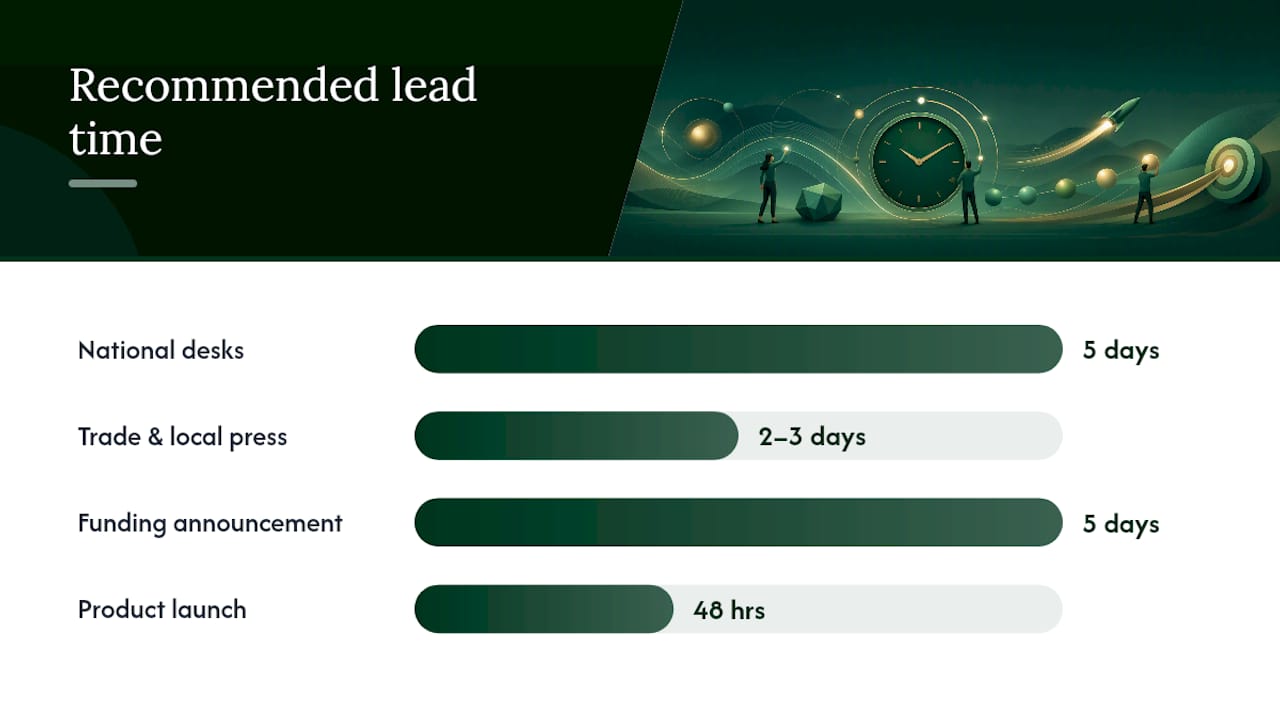
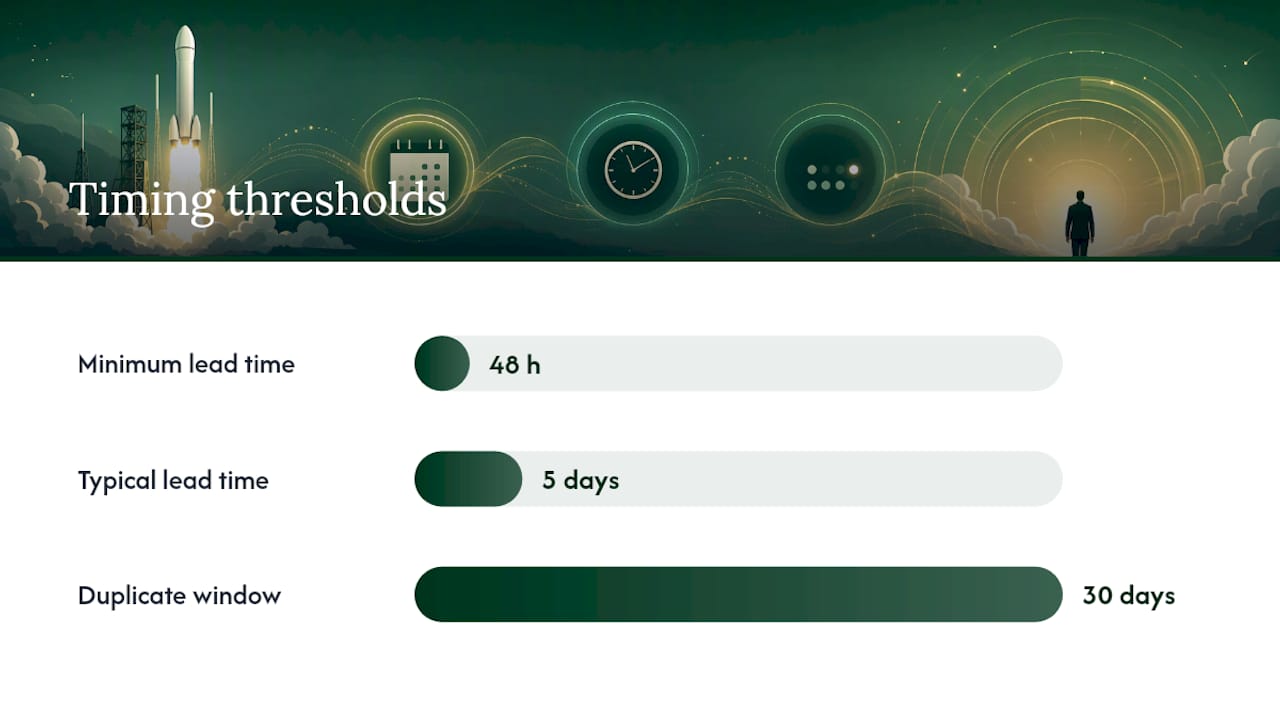
- 48 hours to 5 days ahead of the intended coverage date usually produces better pickup than same-day distribution, according to the PressVerified cohort analysis.
- National desks need the longer end of that window, often close to five days, to fit a story into planning meetings.
- Trade and local press can often work with shorter windows, sometimes 2 to 3 days.
A funding announcement benefits from the full five-day runway so reporters can request interviews. A product launch might work with 48 hours if the news is self-explanatory. A research report or survey release often does best embargoed to a specific morning, giving outlets a fair, simultaneous starting point.
When Should You Hold a Press Release Instead of Sending It?
Sending a release because the calendar says it’s time, rather than because something newsworthy happened, is the fastest way to lose editorial credibility. Reporters who get pitched thin news from the same company repeatedly start filtering that sender straight to spam, and once that pattern sets in, it’s hard to reverse.
Mass syndication carries a similar risk. Distributing a release purely to generate backlinks rarely moves search rankings, since search engines routinely discount syndicated republisher links. Real SEO value comes from independent journalistic coverage the release triggers, not from the release itself sitting on fifty aggregator sites.
Red flags that should stop a release before it goes out:
- No verifiable new fact, product, hire, or milestone.
- The only goal is link volume or SEO padding.
- The news duplicates something already covered in the last 30 days.
- Legal or product teams haven’t signed off on claims made in the draft.
Pro Tip: If you can’t summarize the news in one sentence a stranger would find interesting, it probably isn’t ready to send.
How Do You Know If Your Press Release Cadence Is Working?
Pickup volume alone tells you little if the coverage comes from low-authority republishers rather than outlets your buyers or investors actually read. Track these instead:
- Editorial pickups from independent outlets (not syndicated copies of your own release).
- Branded search spikes in the days following distribution, a signal that coverage reached real audiences.
- Referral traffic from credible domains, measured by quality of source, not raw count.
- Depth of coverage, meaning whether outlets quoted, expanded on, or simply reprinted the release verbatim.
Run small experiments before committing to a permanent schedule: send otherwise similar releases on different days or with different lead times, then compare pickup rate and referral quality between batches. Tools like Prescy can help track which placements are actually driving visibility versus which ones are just noise. Set a minimum evidence threshold, such as consistent pickup from at least one credible outlet, before scaling cadence up. Vanity metrics like total distribution count or syndication reach tell you almost nothing about whether the cadence is earning attention that matters.
A Repeatable Workflow for Planning Press Release Timing
A consistent process removes the guesswork from deciding when to publish. Follow these steps for each release:
- Confirm the news hook is genuine and hasn’t already run in the past month.
- Prepare assets (quotes, images, data) at least a week before the target send date.
- Set the embargo and lead time, typically 48 hours for trade press and up to 5 days for national desks.
- Pick the send window, favoring Thursday mornings and avoiding round-number timestamps that cluster with other releases.
- Target the right desks rather than blasting a generic list.
- Schedule follow-up outreach for 24 to 48 hours after distribution to reporters who haven’t responded.
Build a cadence calendar around this pattern: one quarterly anchor release, one or two monthly maintenance releases, and reserved space for event-driven spikes tied to funding or product news. Loop in product, legal, and investor relations at the start of each quarter, not the week of launch. Coordination failures, a legal hold on a claim or an investor disclosure conflict, cause more last-minute release cancellations than any timing mistake. Partner guidance on pacing releases around product milestones offers a useful sanity check for teams unsure how much news actually justifies a send.
What Storylinepros Sees Working for Startup Visibility Campaigns
An effective release cadence focuses on whether the news gives an AI search engine or a journalist a reason to cite the company as a credible source. This often means prioritizing releases paired with authority-building content, like founder interviews or data-backed reports, over standalone announcements without supporting context.
Patterns that consistently produced the strongest visibility gains for high-growth startups:
- Anchor releases tied to funding or major partnerships, paired with earned media placements the same week.
- Monthly maintenance releases limited to genuinely new milestones, not recycled talking points.
- Budget-conscious distribution focused on a handful of high-authority targets instead of broad, low-value syndication.
Startups with thin news volume often do better sending fewer, sharper releases and investing the savings into placements and community amplification that make each release count for more.
Frequency Is a Symptom, Not a Strategy
The mistake most PR teams make isn’t sending too many or too few releases. It’s treating frequency as the goal instead of a byproduct of actual news. Optimize for newsworthiness and timing first, and the right cadence follows almost on its own.
Measurement discipline matters more than any calendar rule in this article. If a release doesn’t move branded search, earn independent coverage, or support a business milestone, sending another one on schedule won’t fix that. Resist the filler release. It costs more in credibility than it ever returns in visibility.
— Nik
Get Help Building a Release Cadence That Actually Earns Coverage
An alternative to a retainer-based agency guessing at your release schedule is to build cadence around what’s actually citable, then track whether it moved the needle in AI search results and earned media. This approach results in fewer wasted releases and clearer answers about whether announcements actually reached the outlets that matter.

One approach pairs release timing with earned placements, podcast guest spots, and Reddit community amplification so a single anchor announcement works harder across more channels. Some services also include cadence audits for startups unsure whether they’re publishing too much, too little, or just poorly timed. If you want to see how this played out for other high-growth companies, browse our case studies or start with a visibility audit to find out where your current cadence is leaving coverage on the table.
Sources
- 2024 State of the Press Release (PR Newswire)
- How Often Should I Publish a Press Release for SEO | AAMAX
FAQ
Why do press releases end with “30” or “###”?
The “30” or “###” mark is a newsroom convention from print wire-service days signaling the end of the copy, so editors know no more text follows. It has no bearing on press release frequency but remains standard formatting in most release templates.
What is the best time to send a press release?
Mid-morning on Tuesday through Thursday tends to perform best, based on PR Newswire’s wire-traffic data and PressVerified’s pickup analysis showing Thursday outperforming Tuesday for editorial pickup.
What are the 5 W’s in a press release?
The 5 W’s are who, what, when, where, and why, the core facts every release should answer in its opening paragraph so a reporter can understand the news without reading further.
What is the standard format for a press release in 2026?
The standard format still includes a headline, dateline, lead paragraph covering the 5 W’s, supporting quotes, boilerplate company description, and a media contact, though multimedia elements like images and video now factor heavily into engagement.
How does Storylinepros decide how often a client should publish?
Auditing a client’s actual news volume and maturity stage can inform a layered cadence of quarterly anchors and monthly maintenance releases rather than defaulting to a fixed number.