

Thought Leadership PR: A Practical Playbook for Teams
Thought leadership PR is the practice of turning original insight and evidence into earned media coverage, executive visibility, and durable authority, rather than paying for exposure. The single best first move is sharpening one point of view your leadership can defend with data. A working program has four parts: a genuinely original POV, evidence to back it, storytelling and design that make it land, and a distribution plan spanning owned, earned, and amplified channels.
Here’s the fastest path to a working program:
- Sharpen the POV. Pick one contrarian, defensible claim your executive can own.
- Publish a proof asset. Turn it into a report, data visual, or byline with real evidence.
- Activate everywhere. Pitch media, syndicate, seed communities, and support with paid where it counts.
Key Takeaways
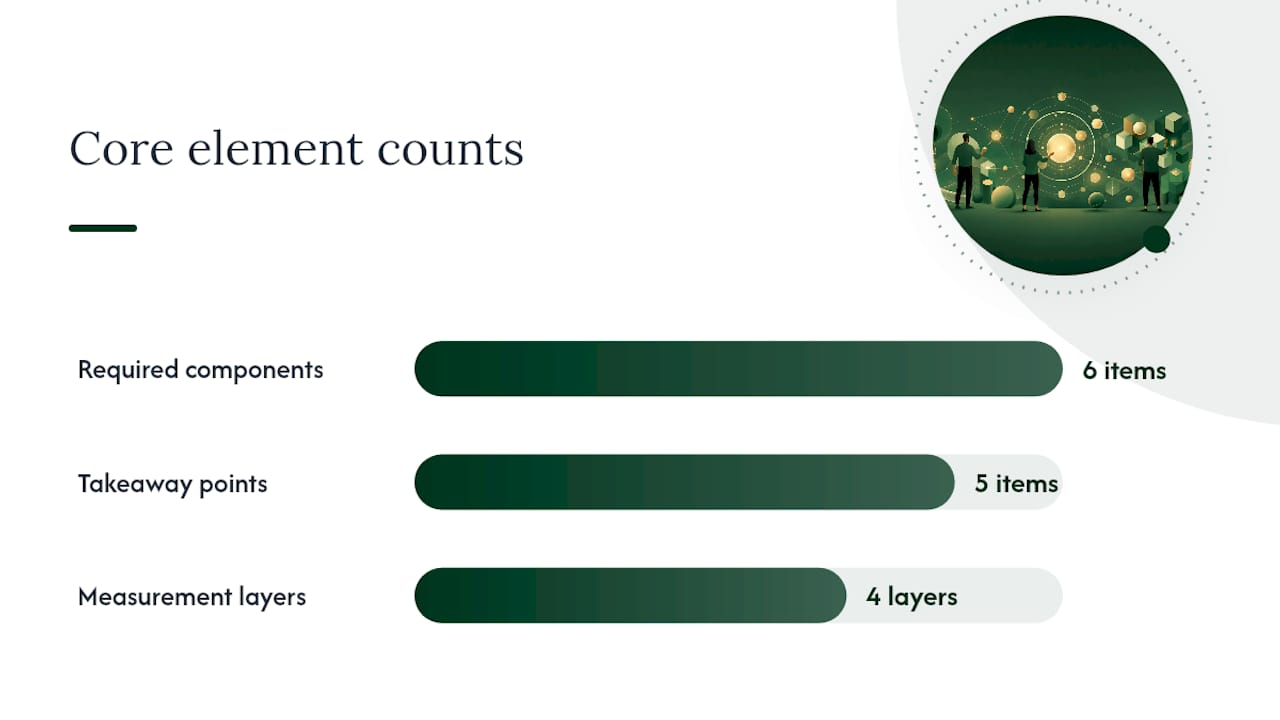
Thought leadership PR works when a defensible point of view, real evidence, and a coordinated activation plan combine, measured in layers from visibility through business influence.
| Point | Details |
|---|---|
| Definition matters | Thought leadership PR earns coverage through original insight, not distributed branded content. |
| Start with outcomes | Plan from business goals and audience mapping before choosing a topic or format. |
| Six components required | Unique POV, evidence, storytelling, design, executive visibility, and distribution all need a plan. |
| Measure in layers | Track production, visibility, engagement, and business influence, not just press clips. |
| Storylinepros option | Offers success-based, AI-focused placement and amplification for teams short on time or research capacity. |
Table of Contents
- What Is Thought Leadership PR and How Does It Differ From Content Marketing?
- Why Should PR Teams and Leaders Invest in Thought Leadership?
- What Core Components Does a Thought Leadership PR Program Need?
- How Do You Plan a Thought Leadership Program?
- Which Thought Leadership Formats Work Best?
- How Do You Activate and Distribute Thought Leadership Content?
- How Do You Measure Thought Leadership PR Results?
- Who Should Own Thought Leadership PR Inside a Company?
- What Does a 90-Day Thought Leadership Pilot Look Like?
- How Do You Make Thought Leadership Discoverable to AI Search?
- When Should You Hire an Agency for Thought Leadership PR?
- Sources
What Is Thought Leadership PR and How Does It Differ From Content Marketing?
Thought leadership PR is the discipline of building a company’s authority by pitching and placing an executive’s original, evidence-backed point of view in earned media, rather than distributing branded content through owned channels. It lives at the intersection of research, narrative, and media relations. The intent is persuasion through insight, not just visibility through volume.
Content marketing and thought leadership PR often get confused, but they serve different jobs:
| Dimension | Thought Leadership PR | Content Marketing |
|---|---|---|
| Purpose | Shift opinion, build credibility | Educate, nurture, convert |
| Evidence bar | Original research or proprietary data required | Curated or repurposed insight acceptable |
| Distribution | Earned media, bylines, syndication | Owned channels, email, paid social |
Pro Tip: Test any idea before you build around it: does it offer an original insight, evidence to back it, and a clear ‘so what’ for the reader’s decision? If any piece is missing, it’s a hot take, not thought leadership.
Why Should PR Teams and Leaders Invest in Thought Leadership?
Thought leadership drives measurable business outcomes when it’s evidence-backed and sustained, not sporadic. Trade coverage in PR Daily has pushed back on the inflated use of “thought leader,” but the underlying discipline still moves real numbers when done right.
- Edelman and LinkedIn’s 2025 report found bold, evidence-backed ideas influence hidden decision-makers who never show up in a CRM.
- Sustained programs raise brand search and executive visibility during vendor evaluations and fundraising conversations.
- Recruitment and M&A conversations often start because a candidate or acquirer read something the founder wrote.
Commit only if you can fund research and protect executive time for at least two quarters. Early signals (media pickup, inbound requests) show up in 60 to 90 days; compounding pipeline and brand-search effects take longer, according to Edelman’s findings on hidden buyers.
What Core Components Does a Thought Leadership PR Program Need?
Every credible program needs six parts: a unique point of view, original evidence, storytelling, information design, executive visibility, and a distribution plan. Skip any one and editors notice.
- Unique POV: A claim that would draw disagreement from a competitor, not a restated industry truism.
- Original research or evidence: Survey data, proprietary usage data, or documented case results. FT Longitude’s step-by-step guide names weak research as the top audience complaint.
- Storytelling: A narrative arc that makes the data mean something to a specific reader.
- Information design: Charts and visuals that carry the argument, not decorate it.
- Executive visibility: A named spokesperson willing to defend the claim on record.
- Distribution rules: A plan for earned, owned, and amplified reach, decided before publication.
When you brief a program, ask for a case-study callout: what outcome resulted, over what period, verified how. Storyline Pros’s case studies show what that kind of proof looks like in practice.
How Do You Plan a Thought Leadership Program?
Planning starts with outcomes and a defensible point of view, not a content calendar. Build the plan in this order:
- Define the business outcome (pipeline, investor attention, recruiting) before picking a topic.
- Map your audience, including the hidden buyers who influence decisions without ever contacting sales.
- Select one to three themes your leadership can speak to with authority.
- Draft a research plan naming the data source, sample, and timeline.
A one-page brief should include: objective, target reader, core claim, evidence source, primary format, and the executive owner. For audience mapping, tie each theme to a persona: a CFO reader wants risk and ROI framing, a CTO reader wants technical defensibility, a board member wants market positioning.
Which Thought Leadership Formats Work Best?
Choose format by argument complexity, audience habits, and how you plan to activate the piece. A dense argument with layered evidence needs a report; a sharp, timely opinion needs a byline.
| Format | Best used when |
|---|---|
| Research report | The argument needs data depth and stands alone as a reference |
| Op-ed / byline | The point is timely and tied to news or a live debate |
| Podcast appearance | The executive communicates better live than in writing |
| Data visual / interactive | The insight is one striking number or trend |
Repurpose every research asset: pull one stat for a byline, build a LinkedIn series from three findings, cut a 90 second clip from the podcast appearance. Pro Tip: If your executive has less than two hours a month, start with a podcast booking, not a report. Talking is faster than writing and still produces quotable material.
How Do You Activate and Distribute Thought Leadership Content?
Activation decides whether a good idea becomes actual influence, and it needs the same rigor as the research behind it. The 30/60/90 playbook from Prose treats activation as a repeatable system, not a one-time push.
- Pitch relevant reporters with an exclusive before general distribution.
- Syndicate the asset to trade outlets and partner blogs.
- Seed the core finding in relevant LinkedIn and Reddit communities.
- Book podcast appearances tied to the same theme.
- Support standout posts with paid amplification, especially when paired with a content strategy built for that channel.
- Days 1 to 10: Exclusive pitch to one top-tier outlet.
- Days 11 to 30: Broader media list, syndication, and owned publishing.
- Days 31 to 60: Community seeding and podcast bookings.
- Days 61 to 90: Paid support on the pieces that already show traction.
How Do You Measure Thought Leadership PR Results?
Measure in layers: production, visibility, engagement, and business influence, since no single metric captures the full effect. The Institute for Public Relations offers evaluation frameworks built around exactly this kind of layered approach.
- Share of voice: Your coverage volume against named competitors on the same theme.
- AI citation presence: Whether AI assistants surface your research when answering related questions.
- Content-assisted pipeline: Deals that touched a thought leadership asset before a sales call.
- Engagement quality: Comments and shares from named industry figures, not just raw volume.
- Executive impressions: Reach of bylines, podcast downloads, and social posts tied to the spokesperson.
| Timeframe | Expected signal |
|---|---|
| 90 days | First placements, early social engagement |
| 90 days | Repeat media requests, inbound speaking invites |
| — | Measurable share of voice, pipeline attribution |
Budget scales with ambition: a narrow pilot around one report costs far less than a monthly program spanning research, design, and full activation, and the 2026 playbook frames that scale up as a 12-month commitment for compounding returns.
Who Should Own Thought Leadership PR Inside a Company?
The communications or PR lead should own the program, working with product marketing, sales, and legal as standing partners, not occasional reviewers.
- Research lead: Owns data collection and validity.
- Narrative owner: Shapes the POV and keeps it consistent across formats.
- Executive coach: Preps the spokesperson for interviews and panels.
- Design lead: Builds the visuals that carry the argument.
- Distribution lead: Runs pitching, syndication, and amplification.
- Measurement owner: Tracks KPIs and reports back monthly.
Run it as a 30/60/90 sprint: days 1 to 30 for research and brief, 31 to 60 for creation and legal review, 61 to 90 for activation and first measurement.
What Does a 90-Day Thought Leadership Pilot Look Like?
A 90-day pilot succeeds by focusing on one POV, one proof asset, and a tight activation plan rather than spreading thin across five ideas.
- Weeks 1 to 4: Finalize the POV, commission or gather data, assign an owner for each deliverable.
- Weeks 5 to 8: Build the primary asset (report, byline, or podcast series) and complete legal review.
- Weeks 9 to 12: Pitch media, syndicate, seed communities, and measure first results.
Success by day 90 looks like: at least one earned placement, one inbound media or speaking request, and measurable engagement from named industry contacts.
How Do You Make Thought Leadership Discoverable to AI Search?
Structure, originality, and transparent evidence increase the odds AI assistants cite your work, according to the 2026 B2B thought leadership playbook, which frames this as a function of Information Gain.
- Write concise section summaries an AI system can extract cleanly.
- Name the expert behind each claim; unnamed sourcing reads as weaker to both readers and AI crawlers.
- Publish your methodology, not just the conclusion.
- Make underlying data available or referenced, not locked behind a generic claim.
Original research and SME-authored perspective are the strongest authority signals available. AI systems favor explicit methodology and named experts over generic, unattributed claims.
…
Lessons from programs that scale influence
Most programs fail from inconsistency, not bad ideas. What scales is a defensible POV, layered measurement, and an executive who protects time for it.
- Prioritize one strong claim over five safe ones.
- Avoid one-off op-eds with no distribution plan behind them.
- Prove ROI with pipeline attribution, not just press clip counts.
When Should You Hire an Agency for Thought Leadership PR?
Hire outside help when executive time is scarce, research needs professional design, or you specifically need visibility inside AI-generated search results. Storylinepros builds programs around exactly that last problem: getting startups cited as the credible reference when AI assistants answer questions in their category, using proprietary technology for earned placements, podcast bookings, and community amplification.

A pilot suits a company testing one POV before committing budget. A monthly program suits a company ready to run the full research to distribution cycle continuously. Success-based engagements suit leaders who want to pay for delivered placements rather than a flat retainer with no guaranteed output. Storylinepros’s case studies show the kind of media reach and growth that resulted from this model. Visit Storyline Pros to talk through which model fits your stage and start scoping your first proof asset.
Sources
- The 2026 B2B thought leadership playbook
- Thought leadership PR: a 30/60/90 playbook for pitch, publish, and amplify | Prose
- Thought Leadership Strategy: Complete 2026 Playbook