

Community-Led Growth: A Practical Playbook for Leaders
Community-led growth (CLG) is a go-to-market strategy where an intentionally built user community drives acquisition, activation, and retention without requiring proportional increases in sales or marketing headcount. In plain terms: your members do work that would otherwise cost you a sales rep or a media budget. To start a pilot today, take three steps: seed a founding cohort of 20–50 power users, activate them with a recurring weekly prompt or challenge, and measure the user-to-user interaction ratio before you measure anything else. Done right, CLG compounds over time, turning your best customers into your most cost-efficient acquisition, retention, and advocacy engine.
Key Takeaways
Community-led growth compounds over time because each engaged member produces content, referrals, and social proof that paid channels cannot replicate at the same cost efficiency.
| Point | Details |
|---|---|
| Seed before you scale | Recruit 20–50 founding members manually and establish recurring pull before opening to the public. |
| Measure activity, not size | Track MAU, user-to-user interaction ratio, and 30-day activation rate — not total member count. |
| Integrate with existing GTM | Tag community touchpoints in your CRM and share data with product, sales, and content teams weekly. |
| Expect a 90–180 day return window | Leading indicators move in weeks 4–8; lagging indicators like retention lift and pipeline take longer. |
| Storylinepros accelerates pilots | Storylinepros delivers founding cohort recruitment, earned placements, and a measurement dashboard as a scoped, results-based engagement. |
Table of Contents
- What community-led growth looks like in practice
- Why community-led growth drives better business outcomes
- Five types of brand community and when to use each
- How to launch a CLG pilot in 30–60–90 days
- How CLG fits alongside product-led and sales-led motions
- KPIs, attribution, and how to show ROI from community
- Common failure modes, governance, and moderation
- A real example: earned media plus community acceleration
- When CLG is the right strategic bet
- How Storylinepros accelerates your CLG pilot
- Sources
What community-led growth looks like in practice
The mechanics are simpler than the buzzword suggests. A member asks a question; another member answers it before your team does. A user publishes a template; 300 others download it and discover your product in the process. A customer shares a win in a Slack channel; two prospects screenshot it and send it to their boss. These are the atomic units of CLG.
Four core motions drive it:
- User-to-user help: Members resolve each other’s problems, cutting support costs and creating searchable knowledge.
- Member-generated content: Templates, tutorials, case studies, and reviews that extend your content surface without your team writing a word.
- Advocacy triggers: Recognition moments, milestones, and creator programs that convert satisfied users into active promoters.
- Product-community reinforcement: Features designed to enable sharing and reputation-building inside the product itself, so community activity and product usage feed each other.
Community formats and when each matters:
Support forums (Discourse, Slack) work best when your product has a learning curve and a high volume of recurring questions. Feedback communities (Canny, Circle) suit teams that want structured product input from engaged users. Educational cohorts (cohort-based courses, hosted Zoom series) are effective for complex products where activation requires behavior change. Advocacy groups (private ambassador programs) fit brands with strong NPS who want to convert promoters into referral sources. Creator/marketplace communities (Figma’s template ecosystem, Notion’s creator program) work when your product produces shareable outputs.
Quick glossary:
- Activation: A new member completes a defined first action within 30 days of joining.
- Advocacy: A member proactively recommends the product or brand without a prompt.
- MAU (Monthly Active Members): Members who perform at least one meaningful action in a 30-day window.
- Community-attributed pipeline: Revenue from prospects who touched the community before converting.
Why community-led growth drives better business outcomes
The business case rests on compounding. Each engaged member produces content, referrals, and social proof that drive organic discovery more efficiently than linear paid channels. A paid ad stops working the moment you stop paying. A member’s published answer, template, or review keeps generating traffic and trust for years.
The specific benefits map directly to metrics leaders track:
- Lower CAC over time: Prospects enter the funnel pre-vetted by peers, which shortens sales cycles. The mechanism: community marketing reduces CAC because peer validation replaces a portion of the persuasion work your sales team would otherwise do.
- Higher retention and LTV: Members who participate actively in a community churn at lower rates than non-members. Belonging is stickier than a feature.
- Deeper product adoption: User-generated tutorials and peer walkthroughs drive feature discovery more effectively than in-app tooltips alone.
- Faster feedback loops: A live community surfaces product friction in hours, not quarters.
- Earned distribution: Member content and UGC become SEO assets, podcast talking points, and social proof without additional production cost.
Figma and Notion are the most-cited examples of this compounding effect. Figma’s template and creator ecosystem directly increased product discovery and adoption by turning every template into a distribution event. Notion’s community-built template library became one of its most effective acquisition channels, according to the PLG Handbook’s analysis of community-led growth. Neither company bought that reach. Members created it.
Five types of brand community and when to use each
Choosing the wrong community format for your goal is one of the most common early mistakes. A support forum will not generate referrals the way an advocacy program will. An educational cohort will not surface product feedback the way a structured feedback community will.
| Community Type | Primary Goal | Expected Outcome | Platform Fit |
|---|---|---|---|
| Support / Q&A | Reduce support load | Deflection rate, searchable knowledge base | Discourse, Slack, Reddit |
| Feedback / Input | Product intelligence | Feature adoption lift, NPS improvement | Circle, Canny, Notion |
| Advocacy / Ambassador | Referrals and social proof | Referral-attributed signups, earned media | Private Slack, email list |
| Educational / Cohort | Activation and onboarding | 30-day activation rate, completion rate | Cohort platforms, Zoom series |
| Creator / Marketplace | Organic discovery and UGC | Template downloads, community-attributed pipeline | In-product, GitHub, Figma Community |
One strategic question cuts through the format decision: do you want to hub (own the platform and the relationship) or rent (participate in an existing community your audience already uses)? Owning a Discord server gives you data and control. Showing up in a Reddit community your users already trust gives you reach and credibility faster. Most mature CLG programs do both, but pilots should pick one.
The PLG Handbook’s guidance on community-led growth makes a point worth internalizing: CLG works best when you serve an existing community rather than trying to manufacture one from scratch. If your users already gather somewhere, go there first.
How to launch a CLG pilot in 30–60–90 days
The sequencing matters more than the platform. Define member identity and recruit 20–50 founding members manually before you open the doors to anyone else. Establish recurring pull before public launch. Grow through content and referrals after that. This order is not optional; reversing it produces ghost towns.
Days 1–30: Pre-launch and founding cohort
- Define your member identity. Write one sentence: “This community is for [specific person] who wants [specific outcome].” Vague member identities produce vague communities.
- Identify your top 1% of users. Power users, vocal advocates, and high-NPS customers are your founding cohort candidates. Recruit them personally, not through a mass email.
- Set pilot goals. Pick three KPIs (see Section 7) and write them down before you recruit anyone.
- Map the conversion path. Know exactly what community action you want members to take that connects to a product action (e.g., “member publishes a template → non-member discovers product via template → signs up”).
- Build the welcome ritual. A personal welcome message, a curated resource list, and a first-contribution prompt sent within 24 hours of joining. The first 7 days of a new member’s experience are the single biggest driver of long-term activation.
Days 31–60: Activation and cadence
- Launch the recurring pull. A weekly prompt, challenge, or live session gives members a reason to return. One-off posts do not build habits.
- Seed the first 10 pieces of content yourself. Answer questions, publish templates, share wins. Members follow the tone and format you model.
- Instrument your CRM. Tag every founding member with “community-first-touch” so you can track their downstream behavior without building a full attribution pipeline yet.
- Run a founding member event. A live call, AMA, or cohort session in week 5 or 6 creates social bonds that asynchronous tools alone cannot replicate.
Days 61–90: Measurement and scale decision
- Review your three KPIs. Are members answering each other’s questions, or is your team still the only responder? Is the user-to-user interaction ratio trending up?
- Identify your first advocates. Who has contributed the most? Recognize them publicly and invite them into a creator or ambassador program.
- Make the scale decision. Based on 90-day data, decide whether to expand the community, adjust the format, or pivot the member identity.
Pro Tip: Seed the community with your top 1% of users and give them public recognition before you invite anyone else. A founding member badge, a creator spotlight, or a named contributor role costs nothing and converts contributors into ongoing advocates.
How CLG fits alongside product-led and sales-led motions
CLG is not a replacement for product-led growth (PLG) or sales-led growth. It amplifies both. The integration patterns are specific and worth mapping before you launch.
CLG + PLG: Surface community content inside the product. When a user hits a friction point, show them a relevant community thread or template instead of a help article. Figma does this natively. The community becomes part of the product experience, and product usage drives community discovery in return.
CLG + sales-assisted: Community members who have been active for 60 or more days are pre-warmed prospects. A sales rep who references a member’s community contribution in an outreach email gets a response rate that cold outreach cannot match. Tag these members in your CRM as “community-activated” and route them to a lighter-touch sales motion.
CLG + content: Member questions are your editorial calendar. The authentic questions your community asks are the exact queries your prospects type into Google and AI search engines. Repurpose them into search-optimized articles, FAQ pages, and social posts. For teams running SEO and paid channels alongside community, this UGC-to-editorial pipeline is one of the highest-leverage outputs a community produces.
Team alignment checklist:
- Product team receives a weekly digest of top community threads and feature requests.
- Marketing team has edit access to the community’s top UGC for repurposing.
- Sales team receives a weekly list of “community-activated” prospects with CRM tags.
- Community manager attends monthly product roadmap reviews.
- Shared KPI: community-attributed pipeline appears on the same dashboard as paid and organic pipeline.
A simple example of the full flow: a member posts a detailed use case in the community forum. Marketing repurposes it as a case study. The case study ranks in search. A prospect reads it, joins the community, asks a question, gets a great answer from another member, and books a demo. That prospect’s CRM record shows “community-first-touch” from the moment they joined. The sales rep knows exactly how to open the conversation.
KPIs, attribution, and how to show ROI from community
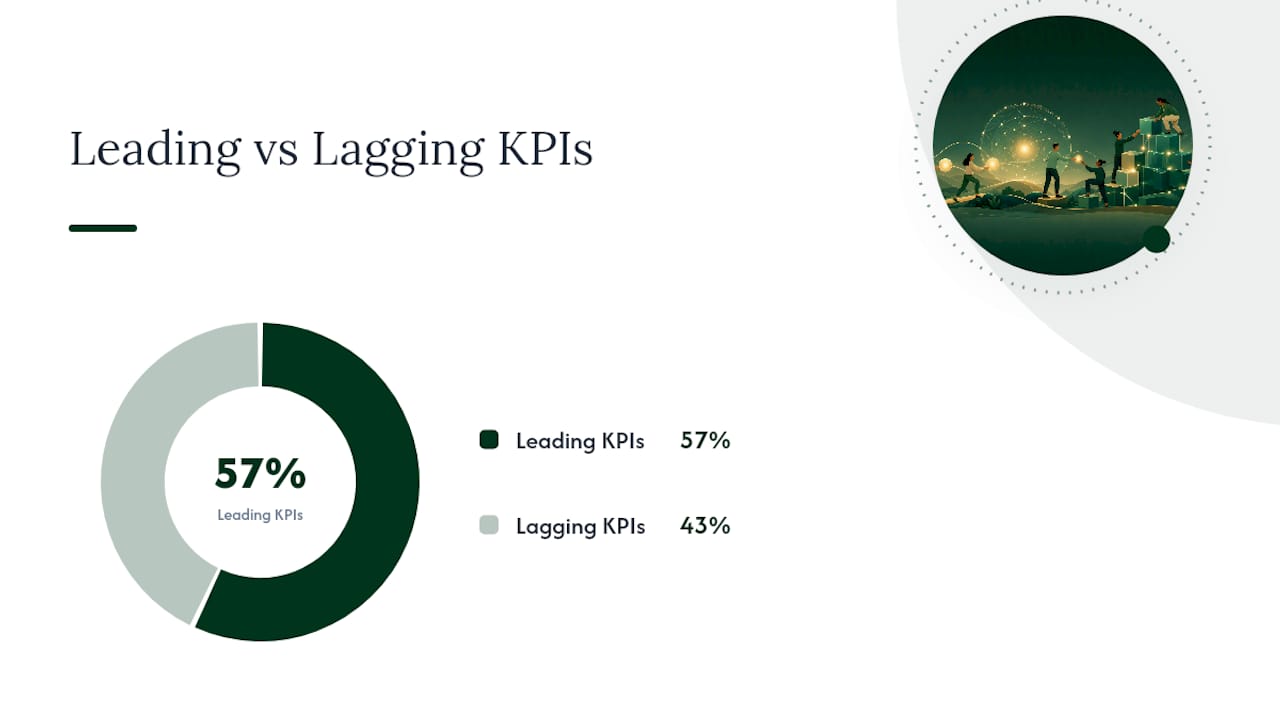
The most common measurement mistake is tracking total member count. It tells you almost nothing about health or business impact. Healthy community metrics focus on activity: monthly active members, member-generated content volume, response rate to questions, and new-member activation within the first 30 days.
| Metric | Type | What It Tells You |
|---|---|---|
| Monthly Active Members (MAU) | Leading | Community health and engagement trend |
| User-to-user interaction ratio | Leading | Whether the community self-sustains or depends on brand |
| New-member activation rate (30-day) | Leading | Onboarding effectiveness |
| Member-generated content volume | Leading | Organic content and UGC pipeline |
| Community-attributed pipeline | Lagging | Revenue impact of community touchpoints |
| Retention lift (community vs. non-community) | Lagging | LTV impact of community membership |
| Referral-attributed signups | Lagging | Advocacy and word-of-mouth efficiency |
Sample OKRs for a 90-day pilot:
- Objective: Prove community drives measurable acquisition and retention impact.
- KR1: Achieve 40% 30-day activation rate among founding cohort members.
- KR2: Reach a user-to-user interaction ratio of 3:1 (three member responses for every one brand response) by day 60.
- KR3: Tag 10 community-attributed opportunities in CRM by day 90.
Attribution without heavy engineering: Use CRM tags (“community-first-touch,” “community-activated,” “community-advocate”) to label contacts who touched the community before converting. Run a lightweight experiment at month three: compare 30-day retention rates for community members vs. a matched cohort of non-members from the same signup period. That single comparison is often enough to make the business case internally.
Expect leading indicators to move in weeks 4–8. Lagging indicators (pipeline, retention lift) take 90–180 days to show clearly. Report early signals honestly and set that expectation with stakeholders before the pilot starts.
Common failure modes, governance, and moderation
Most community pilots fail for one of three reasons: they optimize for vanity metrics, they try to harvest commercial value before members have received any, or they never establish a moderation policy until something goes wrong.
Red flags to watch for:
- Total member count is the only metric on the dashboard.
- The brand team is answering 90% of questions (the community is a support ticket queue, not a community).
- New members receive no onboarding and never post a second time.
- The first sponsored post or sales pitch appears before the community has established trust.
- No one owns moderation, so off-topic or hostile content sits unanswered for days.
Governance template:
- Community manager (internal): Owns daily operations, content calendar, and member recognition. This is a real role, not a side project.
- Volunteer champions: Power users who moderate specific channels or topics. Recognize them publicly and give them early access to features or events.
- Escalation rules: Define in writing what gets removed, what gets a warning, and what results in a ban. Publish a short community guidelines document on day one.
- Content policy: Member content is welcome; direct competitor promotion is not. Spam, harassment, and misinformation have a zero-tolerance policy with a defined response time (24 hours maximum).
- Budget sizing: A part-time community manager (10–15 hours per week) is the minimum viable resourcing for a pilot of 50–200 members. Scale to full-time when MAU exceeds 500.
One governance principle that gets overlooked: the community guidelines document is also a trust signal for prospective members. A community with clear rules feels safer to participate in than one that feels like the Wild West.
A real example: earned media plus community acceleration
The clearest illustration of CLG working alongside earned media comes from the pattern Storylinepros has observed across startup clients who combine community activation with strategic media placement.
Starting condition: a B2B SaaS company with strong NPS but low organic visibility. The founding team had advocates who were happy to talk about the product but had no structured venue to do so, and no media presence to amplify their voices.
Intervention:
- Recruited 30 founding community members from the existing customer base, prioritizing high-NPS accounts.
- Launched a private Slack community with a weekly “wins and lessons” prompt to establish recurring pull.
- Placed three earned media features in industry publications that quoted founding members by name, linking back to the community.
- Seeded member-generated templates and case studies as SEO assets on the company blog.
Outcomes over 90 days:
- User-to-user interaction ratio reached 4:1 by week eight.
- Community-attributed pipeline represented a measurable share of new opportunities tagged in CRM within the pilot window.
- Two founding members became recurring podcast guests, generating additional earned media without incremental cost.
- 30-day activation rate among community members ran significantly higher than the product’s baseline onboarding completion rate.
The replicable insight: earned media placements that feature real members by name do double duty. They validate the community externally and give existing members a reason to share the coverage, which extends reach without a paid distribution budget. You can see the full breakdown of outcomes like these in Storylinepros’ case studies.
When CLG is the right strategic bet
CLG is not the right primary motion for every company at every stage. Here is where it genuinely outperforms other GTM approaches, and where it does not.

CLG is the right bet when:
Your product has a learning curve that benefits from peer education. Your users produce outputs that others want to see or use. Your NPS is above 40 and you have identifiable advocates who are not yet organized. Your CAC is rising and paid channels are showing diminishing returns. You have at least one person who can own community operations for 10 or more hours per week.
CLG is the wrong primary motion when:
You have fewer than 100 active customers and no clear member identity. Your product is a commodity with no community-native use case. You need revenue in the next 60 days and have no existing audience to seed. You are unwilling to invest in moderation and governance.
The honest framing: CLG is a long-term compounding asset, not a short-term acquisition hack. The leaders who get the most from it treat it the way they treat content or SEO: plant it early, instrument it carefully, and give it 6–12 months to show its full return. The community-led marketing framework from HeyOrca makes a useful distinction here: community-led marketing (CLM) is a subset focused on belonging and participation, while CLG is the broader operating system that ties community activity to product, sales, and revenue outcomes. Leaders who conflate the two often underinvest in the revenue instrumentation side and then conclude CLG “didn’t work” after 90 days.
One more thing worth saying plainly: CLG does not replace sales or product. The companies that treat it as a standalone channel rather than an amplifier of existing GTM motions consistently underperform the ones that integrate it tightly with their CRM, their content calendar, and their product roadmap.
How Storylinepros accelerates your CLG pilot
Running a CLG pilot while managing a full GTM motion is where most teams stall. The founding cohort recruitment takes longer than expected. The earned media placements that would validate the community externally never get placed. The measurement setup gets deprioritized until the 90-day window has passed with no data to show.

Storylinepros runs CLG pilots differently. Instead of a retainer with no guaranteed output, the engagement is scoped around delivered results: founding cohort recruitment, earned media placements that feature real members in industry publications, Reddit community amplification, and a measurement dashboard that tracks community-attributed pipeline from day one. The pilot scope includes a welcome ritual and onboarding flow, a 90-day activity cadence, CRM tagging setup, and at least three earned placements in relevant media. No long-term contract required to start.
If you want to see what a measured pilot looks like before committing, review the Storylinepros approach and book a scoping call to map your founding cohort and first three KPIs.
Sources
Further reading:
- Community-Led Growth: A GTM Strategy for B2B SaaS | GTM Playbook
- Community-Led Growth PLG Handbook
- Community-Led Marketing | HeyOrca
- Community Marketing: The Complete Strategy Guide
Tools to evaluate:
This article provides general strategic guidance and does not substitute for professional advice tailored to your specific business context. Verify current platform terms, pricing, and capabilities directly with each provider before committing to a community infrastructure decision.